
g↗GroundMyAILet’s evaluate ↗

REAL PEOPLE. REAL CONDITIONS. REAL EVIDENCE.

Your AI works.
Until it meets
the real world.

Find the gap before your users do.

Evaluate your models and machines against real human experience. Understand what works, where it breaks, and under which conditions.

LLMs & VLMs · Fashion tech · Robotics

THE REALITY CHECK●
AI↗
MODEL OUTPUT
HUMAN EXPERIENCE
THE GAP
Worth understanding.
++
01 / OBSERVE02 / COMPARE03 / UNDERSTAND

A convincing output is only the beginning.

BEYOND THE DEMO

Good on a benchmark. Better understood in the world.

✳

WHEN THE OUTPUT MISSES THE POINT

Looks convincing.
Doesn’t quite deliver.

The answer sounds right. The fit looks perfect. The robot makes its move. Real-world evaluation asks: did it actually do what you needed?

Illustrative ceramic mug with an obvious crack and chipped rim01 / LLMs & VLMs

A fluent answer.
A missed detail.

EXAMPLE RESPONSE

“The mug is in good condition.”

WHAT THE IMAGE SHOWS

A crack and a chipped rim.

A confident description can still miss the evidence that matters to the user.

Test grounding, not just fluency ↗
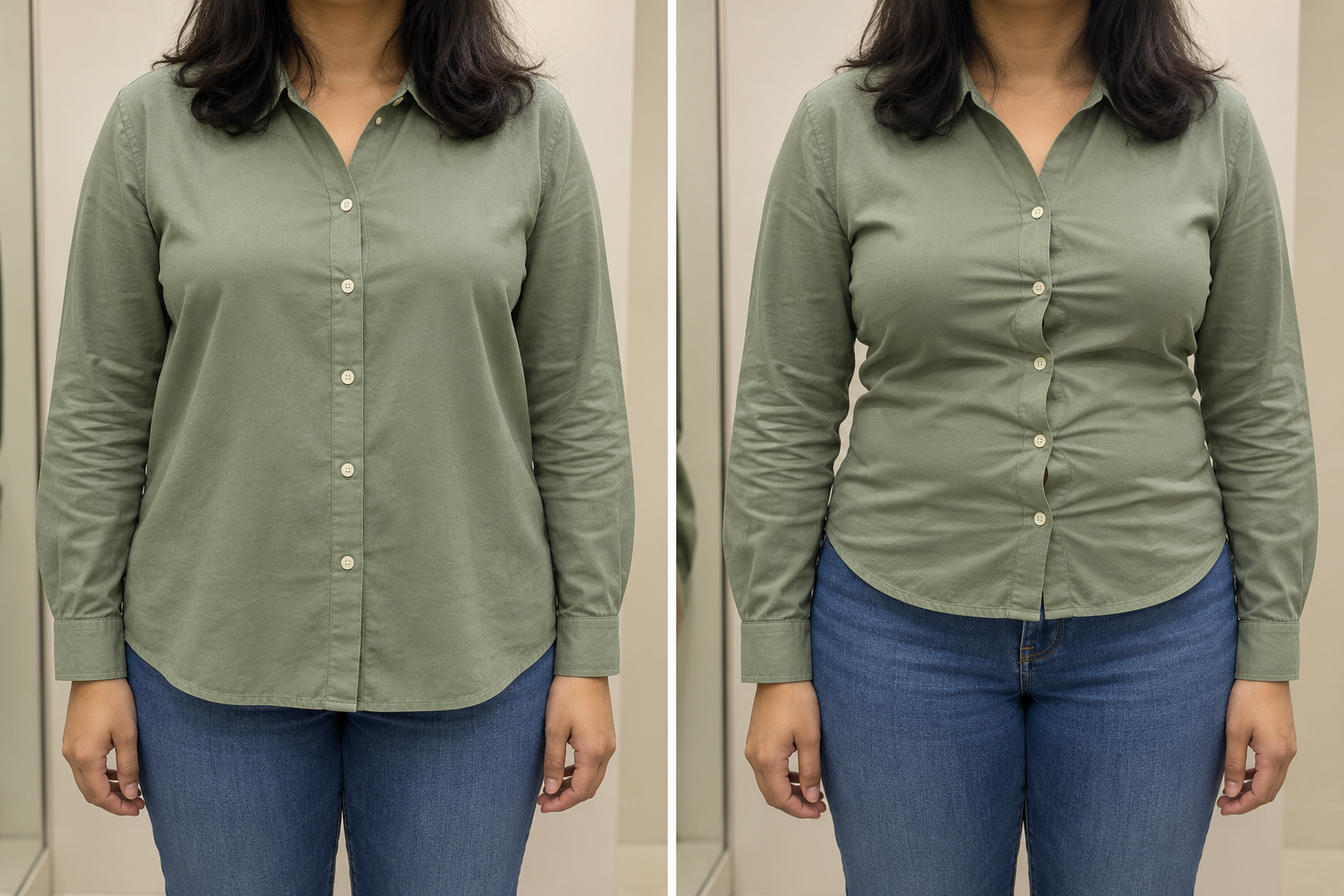

Illustrative comparison of a loose virtual shirt preview on the left and a tight physical fit on the right02 / FASHION TECH
VIRTUAL PREVIEWPHYSICAL TRY-ON

A perfect preview.
A different fit.

WHAT THE PREVIEW SUGGESTS

A relaxed shirt with room to move.

WHAT THE WEARER FINDS

Pulling fabric and gaps between buttons.

A realistic-looking image can create expectations the actual garment doesn’t meet.

Compare the preview with the wearer ↗
Illustrative robot gripper closed on empty air while a blue cube remains on the table03 / ROBOTICS

The right motion.
The wrong outcome.

THE TASK

Pick up the blue cube.

THE OBSERVED SCENARIO

The gripper closes. The cube stays put.

Executing a movement is different from completing the task. Can the system detect and recover from a miss?

Measure the outcome, not the motion ↗
THE QUESTION WE HELP YOU ANSWER

Where does your system fall short—and what evidence tells you why?

Find your model’s gaps ↗

01 / WHAT WE EVALUATE

Three applications.
One reality check.

Different technologies need different tests.
Every study starts with the people, tasks and conditions your product is meant to serve.

01 / LANGUAGE + VISION

LLMs & VLMs

Test how your model responds to the questions, images and situations your users actually bring.

  • Response accuracy & relevance
  • Visual grounding & missed details
  • Instruction following & uncertainty
  • Usefulness across user contexts
02 / FASHION + FIT

Fashion tech

Put virtual try-on beside the physical try-on. See where the promise matches the experience.

  • Silhouette, placement & visual fidelity
  • Fabric appearance & drape
  • Fit expectations versus actual wear
  • Variation across bodies & preferences
03 / MACHINES + PEOPLE

Robotics

Observe your robot carrying out defined tasks in a controlled setting with real users.

  • Task completion & consistency
  • Human interaction & clarity
  • Recovery when something goes wrong
  • Interventions & operating boundaries

02 / WHAT YOU TAKE AWAY

A specification sheet.
With evidence
behind every finding.

A practical account of your model’s strengths and limitations. Clear enough to share with your product team. Specific enough to guide what you improve next.

01

What works well

Capabilities that held up in the tested scenarios.

02

What isn’t working well

Failure cases, mismatches and participant observations.

03

Where the findings apply

The model version, participant group, conditions and limits of the study.

GroundMyAISPEC / 001

ILLUSTRATIVE FORMAT · NOT STUDY RESULTS

Model evaluation
specification sheet

Select an application to explore the report.

APPLICATIONVirtual try-onCOMPARISONGenerated preview ↔ physical try-on
DIMENSIONEVIDENCE TO CAPTURE
Visual fidelityPaired views of garment placement and silhouette
Fit expectationsWhat the preview suggested versus what the wearer experienced
CoverageVariation across tested bodies and garment types
WORKS WELLNEEDS WORKNOT TESTED

Each finding includes supporting evidence and test conditions. Untested capabilities stay explicitly untested.

Download the specification sheet outline ↓

03 / HOW WE WORK

From a question
to a clearer next step.

Agree on the scope first.
Make the findings useful from the start.

01

Define the test.

Tell us what you’re building, who it’s for and what you need to know. Together, we define scenarios and evaluation criteria.

02

Meet reality.

Run the agreed study with suitable participants, tasks and controlled conditions. Capture outcomes and structured feedback.

03

Know what’s next.

Review your specification sheet, evidence and improvement priorities. Use the findings to scope your next iteration.

ABOUT US

Human expertise.
Research meets the real world.

GroundMyAI is a Pixophilia initiative. Our engineering team is led by artificial intelligence and machine learning experts who previously worked at Meta, Adobe, and Carnegie Mellon University.

We collaborate with academic institutions around the world to build and validate our AI models—bringing research and engineering together.

Our collaborators include experts from Carnegie Mellon University, the University of Illinois Urbana-Champaign, Seoul National University, and the Indian Institute of Science, Bengaluru.

Meet Pixophilia ↗

LET’S START WITH YOUR QUESTION

What should your AI
be better at?

Tell us about your product and the gap you want to investigate. We’ll discuss a suitable pilot, scope and deliverables.

office@pixophilia.io ↗

Opens a draft in your email app. Nothing is sent until you send it.